
Department of Sociology & Anthropology, Makerere University info@usaaug.org 0772 525 487

US Visa Restrictions and Uganda’s Delegation at the UNGA: A Symbolic Interactionist and Political Economy Analysis
Explore the implications of US visa restrictions on Uganda's reduced delegation to the UN General Assembly, focusing on state prestige, elite mobility, and the public meaning of international representation.

Introduction
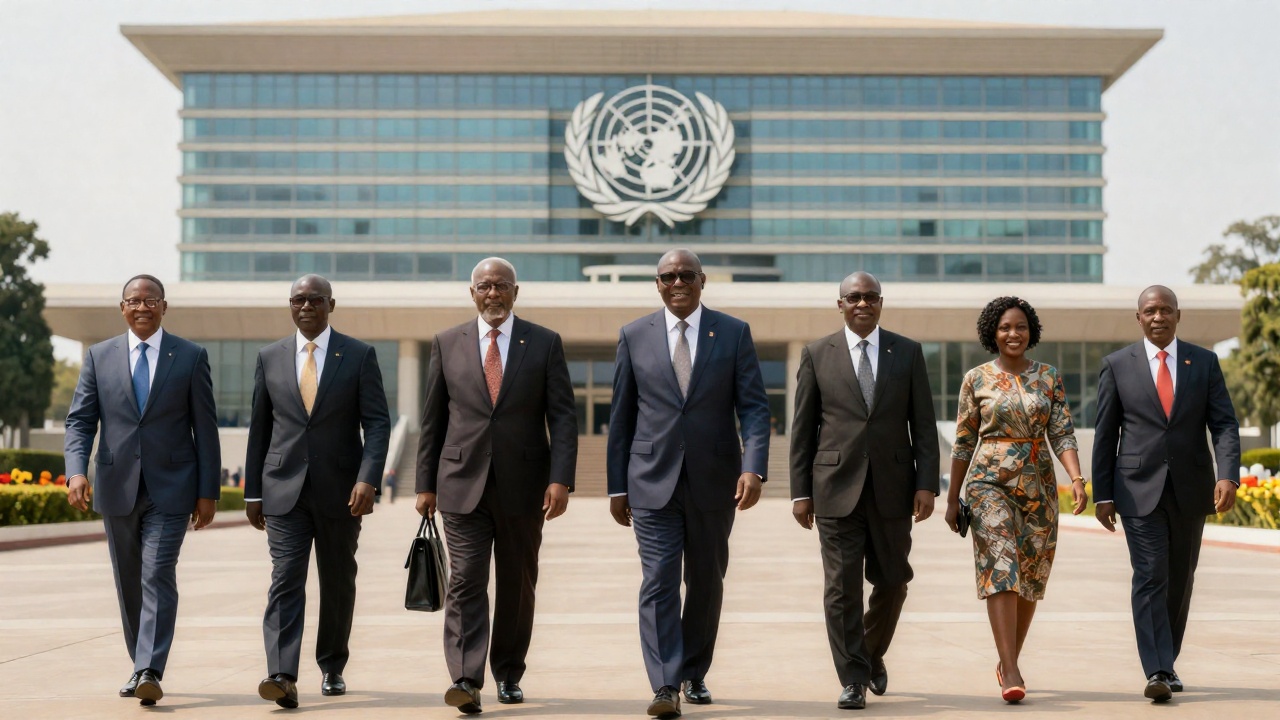
The recent reduction in Uganda's delegation to the 81st United Nations General Assembly (UNGA) in New York, due to US visa restrictions, highlights pivotal themes in governance, diplomatic representation, and public accountability. Vice President Jessica Alupo and four senior officials made up the slimmed-down delegation, a stark contrast to the original 11-member list. This episode provides a rich ground for symbolic interactionist and political economy analysis, revealing how visa restrictions reshape state prestige and the public meaning of Uganda’s international representation.
Sociological and Anthropological Analysis
In postcolonial states like Uganda, participation in multilateral forums such as the UNGA is more than just policy negotiation; it's a performance of sovereignty and international recognition. The sudden reduction in delegation size shifts this performance, raising questions about how external influences can constrain national representation. From a symbolic interactionist viewpoint, official attendance at the UN functions as a public spectacle where leaders project competence and authority.
Historically, Uganda has used its engagement with global institutions as a narrative tool to project legitimacy. A diminished delegation might be perceived as a diplomatic mishap locally, potentially reflecting strained international relations.
Institutional Implications
The situation implicates key governmental bodies like the Ministry of Foreign Affairs and the Office of the Vice President, placing focus on immigration regimes in the global North. Visa decisions often act as instruments of soft power and geopolitical signaling. For Uganda, a reduced presence means diminished lobbying ability, fewer opportunities to present national priorities, and limited networking with development partners.
Youth Perspectives
For many Ugandans, especially the youth active on social media, elite diplomacy often appears disconnected from their day-to-day realities marked by unemployment and economic hardship. The costs associated with official travel are often scrutinized, igniting a political economy of resentment. Youth perspectives highlight the disconnect between state representations abroad and domestic challenges.
Governance Dimensions
The reduced delegation revives debates about external relations and accountability in diplomatic travel. Public scrutiny is likely to increase regarding the necessity and efficiency of large delegations.
Cultural Dimensions
Culturally, the nation’s global image is partly constructed through its leaders' movements abroad. Visa denials challenge narratives of sovereignty and expose the fragility of national prestige, which often requires external validation.
Future Implications
Looking forward, this development may encourage more careful public communication about delegation sizes and selection criteria. There's potential for intensified debates around diplomatic reciprocity and the qualitative value of foreign travel.
Conclusion
The incident not only reflects the complex interplay between foreign policy and domestic perceptions of power and legitimacy but also underscores the need to reassess the symbolic meanings and tangible benefits of international representation. The implications of such diplomatic occurrences resonate far beyond state prestige, challenging narratives of sovereignty and urging a reevaluation of priorities in Uganda's foreign policy framework.
Sources
Business Insider Africa citing Daily Monitor.