Department of Sociology & Anthropology, Makerere University info@usaaug.org 0772 525 487

World Report 2026: Surveillance and Rights Restriction in Uganda
An exploration into Uganda's expanding state surveillance and its impact on social freedoms, using Foucault's theories on discipline.

Introduction
In recent years, Uganda has witnessed a significant increase in state surveillance, capturing public attention and raising critical questions about governance, rights, and citizenship. Human Rights Watch's World Report 2026 sheds light on the multifaceted interplay between surveillance, state power, and social rights in Uganda, offering a critical political-sociological perspective on the situation.
Sociological and Anthropological Analysis
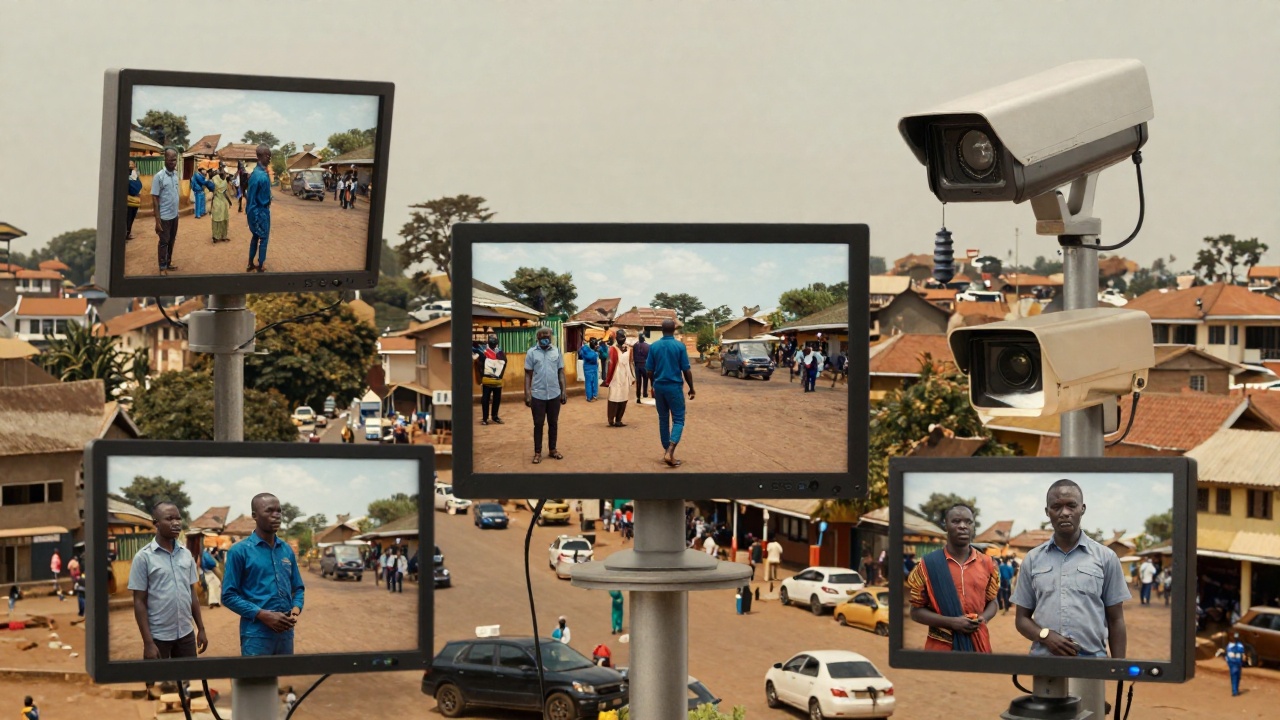
From a sociological viewpoint, the expansion of video surveillance and personal data collection in Uganda forms a classic example of how state capacity evolves alongside anxieties about accountability and individual rights. Inspired by Foucault’s theory of discipline and surveillance, these practices illustrate how technology and legislation not only enhance state ability to monitor but also cultivate a culture of self-censorship and distrust.
Anthropologically, the report underscores how laws, such as the 2023 Anti-Homosexuality Act, merge with existing social constructs. This fusion shapes an environment where some citizens are rendered suspect based on their identity, affecting their everyday interactions and sense of belonging.
Institutional Implications
The continuous expansion of surveillance poses significant challenges for Ugandan institutions. The legal justification of data collection under the guise of “national security” reflects a broader normative pattern where exceptional powers risk becoming normalized. This has repercussions for the judiciary, legislature, civil society, and media. Without adequate oversight, there’s a looming threat that surveillance tools could transition from safeguarding public security to managing political dissent.
Youth Perspectives
The youth of Uganda, heavily engaged with digital media, find themselves at the forefront of this surveillance expansion. Their online activities are subject to scrutiny, potentially stifling political expression. The report highlights the sociological significance of youth perspectives, particularly as they negotiate the dual role of technology as both a platform for free expression and a tool for monitoring.
Governance and Cultural Dimensions
Governance in Uganda has historically blended development narratives with strong executive authority, often framing security measures as vital for national stability. However, this raises sociological questions about where authority ends and where infringement on personal freedoms begins. Culturally, the issue extends beyond legal domains, probing into moral narratives and the contested terrains of respectability and community boundaries.
The enforcement of the Anti-Homosexuality Act can further alienate minority groups, stressing the intersection of law and morality in governing bodies and social circles alike. Public discourse influenced by the act may foster exclusion by legitimizing stigma through institutional support.
Future Implications
Looking forward, institutional and public responses will shape Uganda's surveillance trajectory. Robust oversight mechanisms and vibrant civic discourse could ensure that surveillance serves public welfare rather than state control. Conversely, unchecked surveillance might strain citizen-state relations and shrink civic spaces. The analytical task lies in deciphering whether state power in Uganda functions as a safeguard, a mechanism of control, or a nuanced blend of both.
Conclusion
The World Report 2026 serves as a cautionary tale for Uganda, hinting at the dual nature of surveillance as a guardian of security and a potential vehicle for rights erosion. For Ugandans, the stakes are high. As the technological landscape evolves, so too must efforts to safeguard democratic principles and human dignity.
Sources
Human Rights Watch
Uganda Sociological & Anthropological Association